
Can Mouth Cancer Still Happen After Quitting Gutkha?
Introduction
Quitting gutkha is one of the best decisions you can make for your health. If you’ve managed to leave the habit behind, give yourself credit — it’s not easy. But here’s a question that catches a lot of people off guard: does the risk of mouth cancer go away the moment you quit, or does it stick around?
The honest answer is that it depends, and it’s worth understanding why. This isn’t meant to scare you. It’s meant to help you stay one step ahead — and if you ever need clarity on your own risk, speaking to a head and neck cancer surgeon in Ahmedabad is the safest way to get real answers instead of guessing.
Why the Risk Doesn't Disappear Overnight
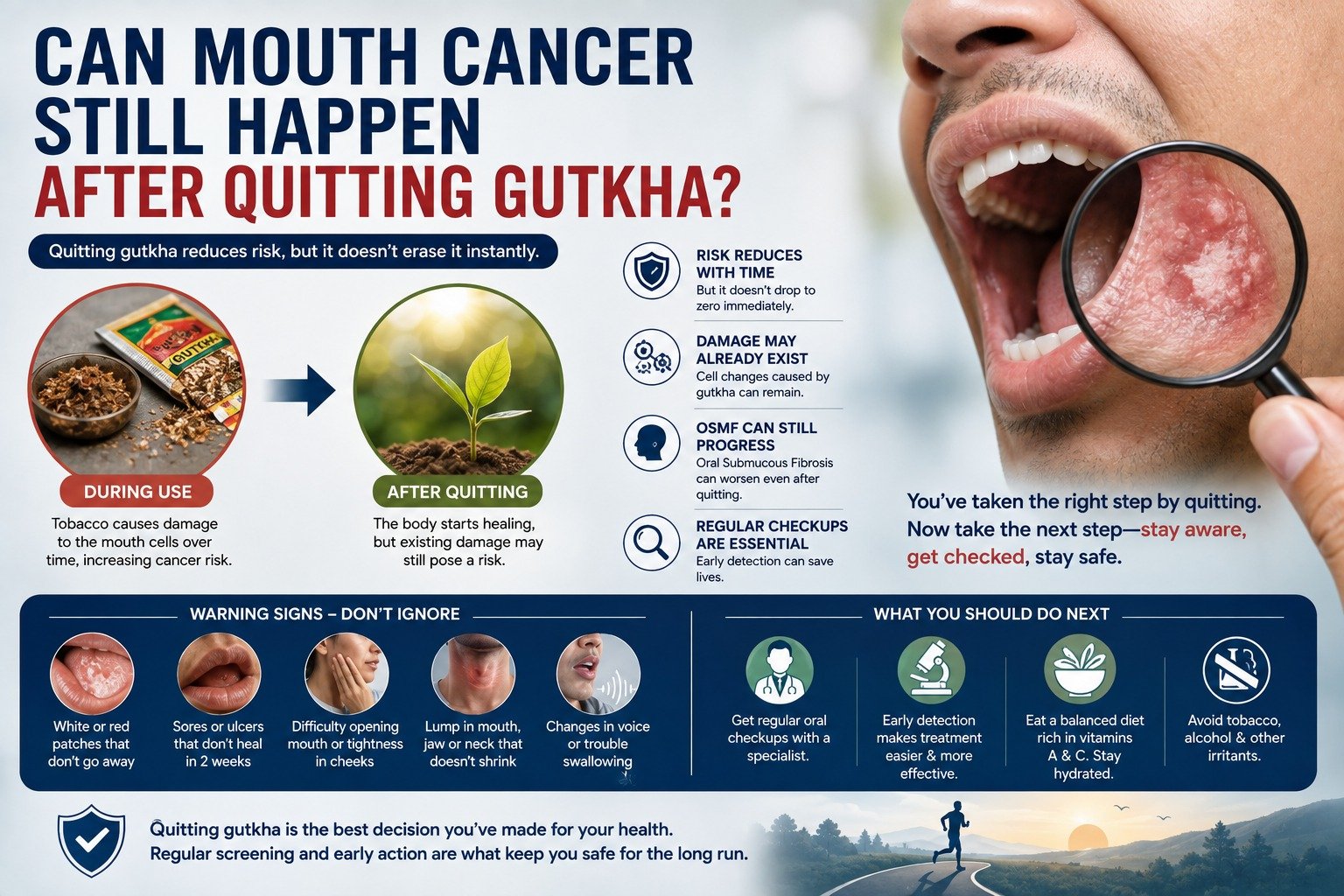
Gutkha and other forms of chewing tobacco don’t just irritate the mouth while you’re using them. Over months and years, they cause real changes at a cellular level inside the mouth’s lining. Once you quit, your body does start healing, but any damage that had already progressed doesn’t reverse itself instantly. Some cells may already carry changes that make them more likely to turn cancerous later, even without any more tobacco exposure.
This is why doctors often say that quitting stops new damage from happening, but it doesn’t erase what’s already there. The risk decreases with time, but it doesn’t hit zero the day you quit.
Oral Submucous Fibrosis — A Condition That Can Still Progress
One thing many people don’t know is that a condition called Oral Submucous Fibrosis, or OSMF, can actually continue to worsen even after someone stops chewing gutkha. OSMF causes the tissue inside the mouth and throat to become stiff and fibrous, which slowly makes it harder to open the mouth fully.
If you’ve quit gutkha but you’re noticing that opening your mouth wide feels tighter than before, or your cheeks feel stiff, don’t assume it’s unrelated just because you’ve stopped the habit. OSMF is considered a precancerous condition, meaning it carries a real chance of developing into mouth cancer over time, and it needs proper monitoring.
So How Long Does the Risk Actually Last?
There’s no single number that applies to everyone. The risk depends on how long you used gutkha, how frequently, and whether you already have changes like white or red patches, ulcers, or OSMF in your mouth. Generally speaking, doctors continue to recommend regular checkups for several years after quitting, since studies have shown that the risk of oral cancer, while lower after quitting, remains higher than that of someone who never used tobacco for a good number of years.
This is exactly why regular screening matters so much, especially in a place like Ahmedabad, where gutkha and tobacco use has historically been common. Getting screened isn’t about living in fear. It’s about catching a problem while it’s still small and easy to treat. A qualified head and neck cancer surgeon in Ahmedabad can assess your specific history and tell you how long you should continue monitoring, rather than relying on generic timelines.
Warning Signs You Should Never Ignore
Even after quitting, keep an eye out for these changes in your mouth:
- White or red patches that don’t go away
- A sore or ulcer that lingers for more than two weeks without healing
- Difficulty opening your mouth fully or a feeling of tightness in your cheeks
- A lump in the mouth, jaw, or neck that doesn’t shrink
- Changes in your voice or trouble swallowing
None of these automatically mean cancer. But they’re signals your body is sending, and they deserve a proper check rather than a guess.
What You Should Do Next
If you’ve quit gutkha, that’s a huge step in the right direction, and it genuinely lowers your risk over time. But pairing that decision with regular oral checkups gives you the best possible protection. A simple visual exam by a specialist can catch early changes long before they become serious, and if something looks unusual, further tests like a biopsy can confirm what’s going on quickly.
Diet also plays a supporting role. Eating foods rich in vitamins A and C, staying hydrated, and avoiding other irritants like alcohol and smoking can help your mouth’s tissue heal better over time.
Conclusion
Quitting gutkha was the right call, and it puts you on a much safer path than continuing the habit. But mouth cancer risk doesn’t switch off instantly, especially if there’s already been years of tobacco exposure or existing changes like OSMF. Staying alert to symptoms and getting regular checkups is what actually protects you in the years that follow.
If you’ve quit gutkha and want peace of mind, or you’ve noticed any of the warning signs above, it’s worth getting a proper oral examination from a specialist. Dr. Mihir Shah is a trusted head and neck cancer surgeon in Ahmedabad with over 10 years of experience and more than 3,000 patients treated, including complex oral cavity cases. He can guide you through screening, diagnosis, and treatment if needed.