
Can You Live a Normal Life With One Lung After Lobectomy Surgery?
Introduction
When someone hears they need lung surgery for cancer, the first fear is usually the same: will I be able to breathe properly again? Will I ever feel normal? It’s a fair question, and one that comes up in almost every consultation.
The good news is that most patients go on to live full, active lives after this surgery. If you’re researching the best lung cancer treatment in Ahmedabad, understanding what actually happens during and after a lobectomy can help you feel a lot less anxious about the road ahead.
What Is a Lobectomy and When Is It Needed?
Role of Surgery in Lung Cancer Treatment
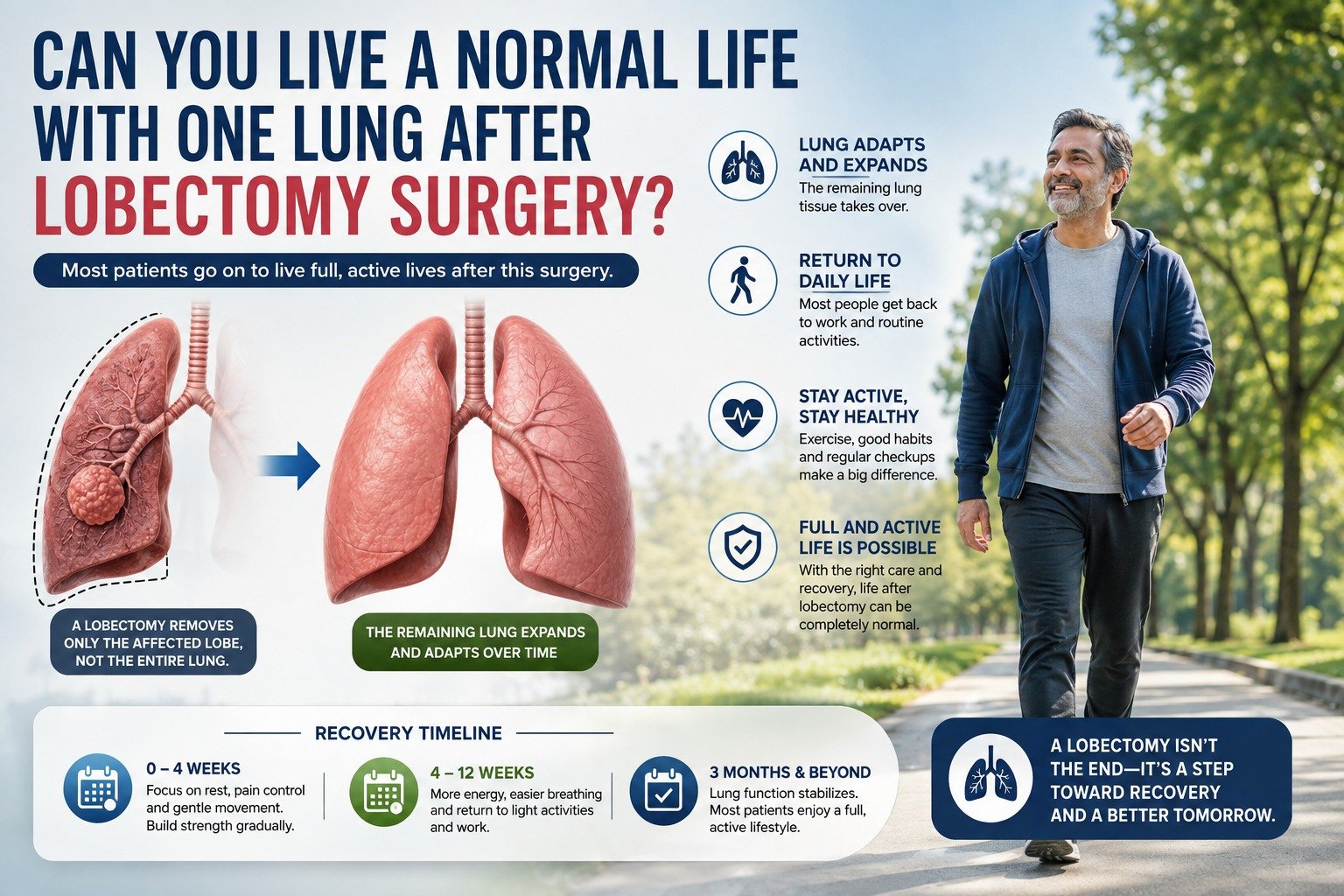
Your lungs aren’t one solid piece. The right lung has three sections called lobes, and the left has two. A lobectomy means removing just one of these lobes, the one where the tumor is sitting, not the entire lung.
Lobectomy vs Pneumonectomy — Understanding
the Difference
A pneumonectomy removes the whole lung, but that’s only needed in specific, more advanced cases. Most patients are candidates for a lobectomy, which is a far less drastic surgery and preserves much more healthy lung tissue.
Do You Actually Lose an Entire Lung?
Lobectomy Removes Only One Lobe, Not the Whole Lung
This is a common point of confusion. Many patients walk into their first appointment thinking they’re about to lose an entire lung. In reality, most lung cancer surgeries only remove the affected lobe, leaving the rest of that lung and the other lung completely intact and working.
Why This Misconception Is So Common
The word “lung surgery” sounds absolute, so it’s natural to assume the whole organ is gone. But surgeons plan these procedures specifically to remove only what’s necessary, not more.
How the Remaining Lung Tissue Adapts
Expansion of the Remaining Lung
Once part of the lung is removed, the space doesn’t stay empty. Over the following weeks, the remaining lung tissue gradually expands to fill the space left behind. The chest wall and diaphragm also shift slightly to accommodate this change.
Changes in Breathing Capacity Over Time
Breathing capacity does drop a little right after surgery, and that’s completely expected. Most patients notice they get a bit more breathless during activities like climbing stairs or brisk walking in the first month or two. This usually improves steadily as the body adjusts and the remaining lung tissue takes over the extra workload.
What Daily Life Looks Like After Surgery
Routine Activities and Work
Most people return to desk jobs within four to six weeks. Physically demanding jobs may need a bit longer. Daily chores like cooking, walking the dog, or light housework don’t need to stop permanently.
How Much Physical Activity and Exercise Is Safe
Walking, light jogging, swimming, and even cycling are usually possible again once the surgeon gives the go-ahead, typically around six to eight weeks post-surgery. Travel, including flying, is generally fine after the initial recovery period, though it’s worth checking with your doctor first.
Situations That Need Extra Caution
A few things do need more caution going forward, like avoiding smoke exposure, staying away from high pollution days when possible, and getting a flu or pneumonia vaccine if your doctor recommends it. None of this means putting your life on hold.
Recovery Timeline — When Life Starts Feeling Normal Again
The First 2 to 4 Weeks
The first two weeks are usually the toughest, mostly around managing pain and getting your energy back.
Three Months In — How the Body Adjusts
By the one-month mark, most patients are walking comfortably and doing light activity. By three months, breathing tends to feel far more settled, and many patients say they almost forget about the surgery in daily life.
Long-Term Lung Function
Full lung function stabilizes over several months, and while it may never be exactly what it was before surgery, it’s usually more than enough for a completely normal, active lifestyle.
Tips for a Smoother Recovery
Breathing Exercises and Physiotherapy
Breathing exercises make a real difference. Your surgical team will usually give you a simple incentive spirometer to practice with, and using it regularly speeds up lung expansion. Short, frequent walks are better than pushing for one long walk.
Avoiding Smoking and Pollution
Quitting smoking, if you haven’t already, is one of the single best things you can do for your recovery and your long-term health.
Importance of Regular Follow-Up Checkups
Regular follow-up scans matter too. They’re not just about checking for recurrence, they also help your doctor track how well your lung function is recovering.
Finding the Right Care in Ahmedabad
Recovery outcomes depend heavily on the surgical approach used and how experienced the surgical team is with lung procedures. This is where choosing the best lung cancer treatment in Ahmedabad really matters. Minimally invasive and robotic techniques, where available, tend to mean smaller incisions, less pain after surgery, and a quicker return to normal breathing compared to traditional open surgery.
Dr. Mihir Shah, a DNB-qualified surgical oncologist at Shalby Hospital, has treated a wide range of thoracic and cancer cases with this exact goal in mind, removing the cancer completely while protecting as much healthy lung function as possible. You can read more about the full approach to lung cancer surgery and how each case is planned individually.
If you’re also exploring other surgical options, it’s worth going through the surgical oncology background and experience behind the treatment plans offered.
Conclusion — A Diagnosis Isn't the End of a Normal Life
Losing part of a lung sounds frightening, but for most patients, it becomes a manageable chapter rather than a permanent limitation. With the right surgical technique, proper post-surgery care, and a bit of patience during recovery, a full and active life is very much within reach.
If you or someone in your family has recently been diagnosed with lung cancer, getting a clear, honest second opinion can make all the difference in choosing the right treatment path. Book a consultation with Dr. Mihir Shah at Shalby Hospital, Ahmedabad, to discuss the best course of action for your specific case.