
What Diet Should I Follow During Colon Cancer Treatment?
Introduction
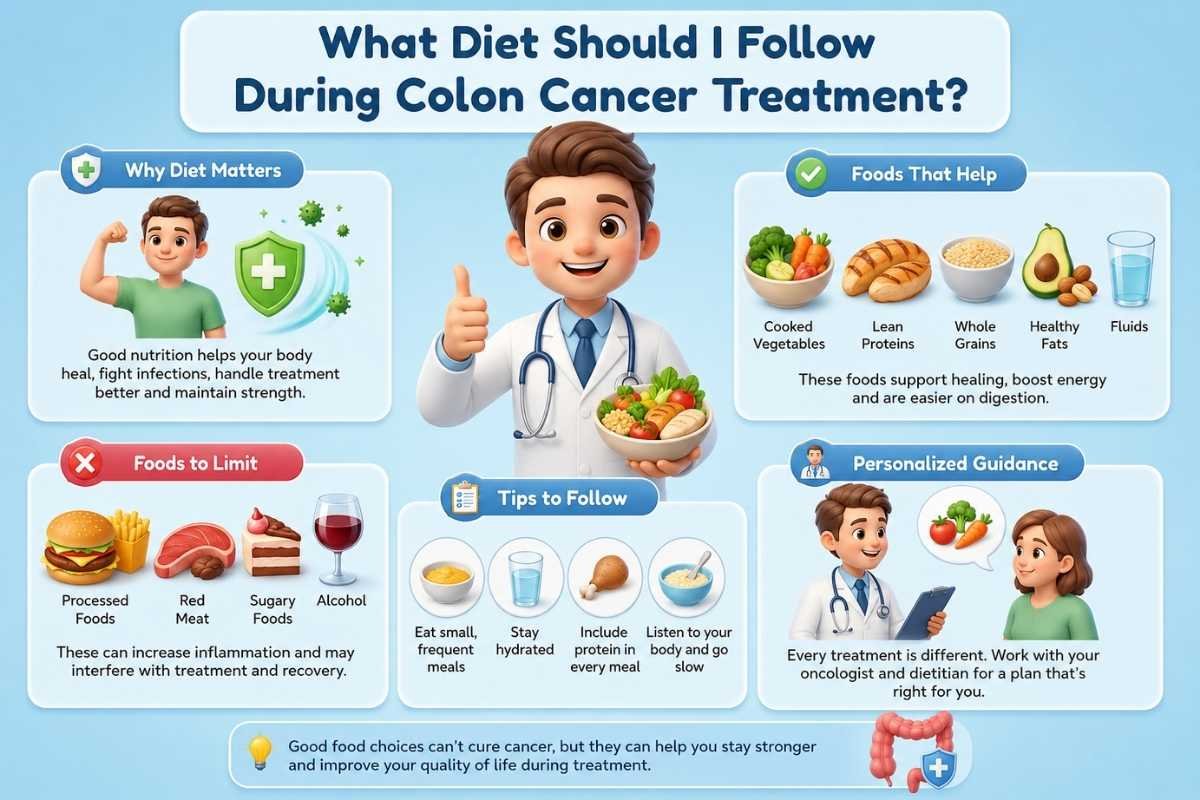
Right after a colon cancer diagnosis, food suddenly becomes a big question mark. Should you cut out sugar completely? Go all-liquid? Load up on supplements you’ve read about online? The truth is, diet during treatment isn’t about extremes — it’s about supporting your body through surgery, chemotherapy, or radiation, so you have the strength to actually get through it. What you eat won’t cure the cancer on its own, but it plays a real role in how well you tolerate treatment and recover afterward.
Why Diet Matters More Than People Expect
Cancer treatment is physically demanding. Surgery needs your body to heal tissue, chemotherapy can affect appetite and digestion, and radiation sometimes causes fatigue that makes eating well feel like a chore. Good nutrition during this period helps maintain muscle mass, supports your immune system, and can reduce treatment-related side effects like nausea or weakness. This is exactly why oncologists increasingly treat nutrition as part of the treatment plan, not an afterthought.
Right After Surgery: Keep It Simple and Gentle
In the days immediately following colon surgery, your digestive system needs time to recover. Most surgeons recommend starting with clear liquids, gradually moving to low-fibre, easy-to-digest foods like soft rice, boiled vegetables, and lean proteins before slowly reintroducing your regular diet. High-fibre foods, raw vegetables, and anything heavy or spicy are usually best avoided in this early phase, since they can strain a healing gut. Your surgeon or a dietitian will typically guide this transition based on how your body responds.
Eating Well During Chemotherapy
Chemotherapy affects everyone differently, but appetite loss, nausea, and taste changes are common complaints. Instead of forcing three large meals, many patients find it easier to eat five to six smaller meals through the day. Protein becomes especially important here — eggs, dal, paneer, fish, or chicken help repair tissue and maintain strength during a phase when the body is under real stress. Staying hydrated matters just as much, particularly if chemotherapy is causing diarrhoea or vomiting, since dehydration can make side effects worse and delay treatment cycles.
Foods That Generally Help
Once your digestive system stabilises, a diet rich in fibre from cooked vegetables, whole grains, and fruits supports gut health and may help lower the risk of recurrence over time. Lean proteins support muscle repair, while healthy fats like olive oil and nuts provide steady energy without overloading digestion. Turmeric, ginger, and ample fluids are commonly recommended too, mainly because they’re gentle on the stomach and can ease mild nausea.
Foods Worth Limiting
Processed and red meat have been linked to a higher risk of colorectal cancer in multiple studies, so most oncology teams recommend cutting back significantly during and after treatment. Highly processed snacks, excess sugar, and alcohol are also generally discouraged, since they add little nutritional value while potentially interfering with recovery and treatment effectiveness. That said, complete restriction isn’t necessary — moderation, guided by your treatment team, works better than rigid rules that are hard to sustain.
Should You Take Supplements?
It’s tempting to reach for supplements when appetite is low, but not every supplement is safe alongside chemotherapy or radiation. Some can interfere with how treatment drugs work in the body. Always check with your oncologist before starting anything beyond a standard multivitamin, rather than relying on general advice found online.
Managing a Colostomy Through Diet
For patients who need a temporary or permanent colostomy after surgery, diet does need some adjustment — introducing new foods one at a time, chewing thoroughly, and staying alert to foods that cause gas or blockages. This usually settles into a manageable routine within a few weeks, and a dietitian familiar with ostomy care can make this transition far smoother.
Personalised Nutrition Guidance Matters
Every patient’s treatment plan looks different depending on the stage of colon cancer, the type of surgery performed, and how their body responds to chemotherapy or radiation. This is why generic diet charts found online rarely work well on their own. At Dr. Mihir Shah’s practice, based at Shalby Hospitals in Ahmedabad, nutrition guidance is built around the individual case, not a one-size-fits-all plan, and forms part of a broader approach to colon cancer treatment in Ahmedabad that also includes surgery, chemotherapy, targeted therapy, and supportive care depending on the stage.
Patients considering colon cancer treatment in Ahmedabad are encouraged to have this conversation early, ideally before surgery begins, so nutrition support is in place from day one rather than added in as an afterthought once side effects appear.
Eating Through Treatment, One Step at a Time
There’s no single “cancer diet” that works for everyone, and chasing perfection with food often adds unnecessary stress during an already difficult time. Focus on eating enough, staying hydrated, prioritising protein, and adjusting gradually as your body responds to treatment. Small, consistent choices matter far more than any single “superfood.” If nutrition ever feels overwhelming, ask your treatment team for a referral to a dietitian who understands oncology care specifically — you don’t have to figure this out alone.